Temporary outdoor events increasingly require flexible ticketing infrastructure to manage crowds, seasonal demand, and variable venue layouts. Event organizers now prioritize systems capable of handling sudden demand surges, with 47% of pop-up entertainment venues adopting mobile ticketing solutions in 2023 (Event Tourism Growth Report 2024).
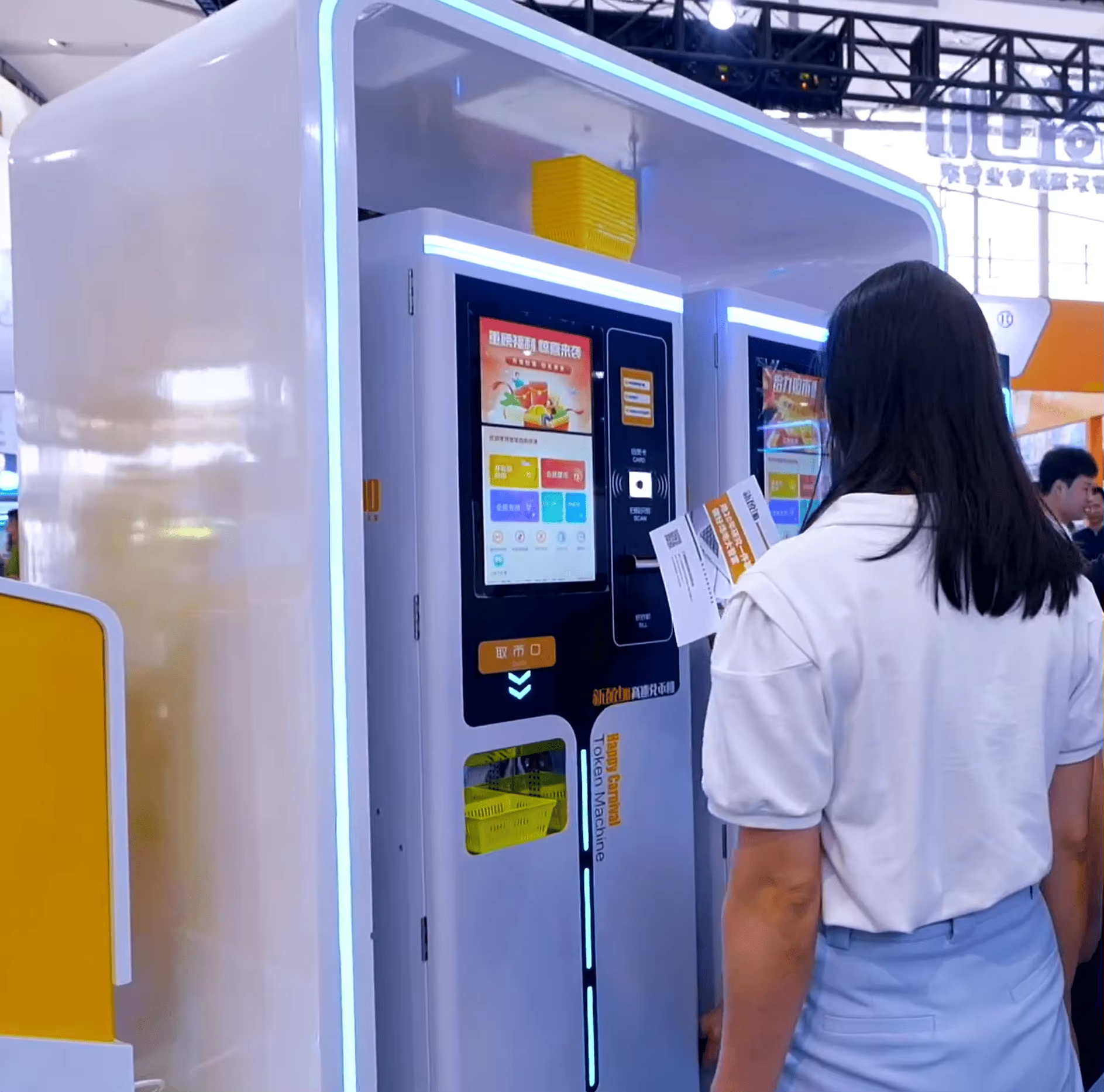
Around the world, food fairs, music events, and local exhibitions bring in about 32% of the money made from event-based tourism. For these temporary events, organizers need ticket systems that can be set up quickly within just a couple of hours, handle contactless payments, and work alongside crowd control software. Take a look at some recent festivals in Europe last year where they used mobile ticket stations instead of regular booths. The results were pretty impressive actually – people waiting in line spent roughly 63% less time than those at traditional ticket counters according to industry reports from 2023. Makes sense when you think about it since nobody wants to stand in line forever before getting into their favorite concert or food festival.
The pop-up entertainment sector has grown 28% annually since 2021, generating $12.7 billion in 2023. Rural events represent 41% of this growth, driven by agritourism and glamping experiences that rely on mobile ticketing hubs. Urban installations like rooftop cinemas and park-based markets saw 22% higher ticket sales when using portable units instead of stationary booths.
With modular design, event planners can go from small gatherings like farm dinners for around 100 people all the way up to massive festivals with tens of thousands attending, still using basically the same parts throughout. Last year's tests showed these portable units could handle about 1,200 tickets every hour even when facing pretty strong wind conditions at around 35 miles per hour. That kind of performance makes them reliable no matter what unpredictable weather might come their way outdoors. Industry folks have been talking about this too. Reports coming out recently point to significant savings when using these reusable ticket booths. One estimate puts the cost reduction at roughly $18k each time they set something up because there's no need for building structures from scratch plus fewer staff members required overall.
Portable event ticket houses must withstand unpredictable conditions—from torrential rains to scorching heat—while maintaining operational integrity. Engineered as critical touchpoints at festivals, parks, and temporary venues, these structures balance mobility with resilience.
Independent testing has found that these portable ticket booths keep working even when temps drop to minus 22 degrees Fahrenheit or climb all the way up to 122 degrees. The coast brings special problems though. Salt air eats away at regular materials three times faster than what happens inland according to recent research from Lisun Group back in 2024. That's why companies actually test their prototypes against years worth of wear and tear before production starts. They blast them with high pressure water to check if seals hold up, while also putting them through simulated windstorms reaching speeds around seventy five miles per hour in specially built tunnels.
The latest models feature aerospace quality aluminum frames paired with UV resistant polycarbonate windows that cut down on material wear and tear compared to old school PVC options by around 40%. The galvanized steel connections stand up to corrosion pretty well too. We've run them through salt spray tests for over 5,000 hours now, which basically means they should last about 15 years if installed near the coast. For insulation, these units come with triple layered walls plus reflective coatings inside. Even when temperatures outside are scorching hot, the interior stays comfortably between about 68 and 77 degrees Fahrenheit according to our field tests in some pretty harsh climates.
The portable ticket houses kept running nonstop through 14 straight days in Arizona's Sonoran Desert where temps hit 113 degrees Fahrenheit and UV levels went over 11 on the index. Down in Florida along those storm battered coasts, these same units handled an impressive 55 inches of rain each year without any power issues. Why? Because they've got this special roof material that repels water much better than regular ABS plastic does, actually shedding it about eight times quicker. Real world testing like this backs up the 99.9% uptime claim, which gives event organizers peace of mind when setting up important operations that absolutely cannot afford downtime.
For those running seasonal or rotating outdoor events, portable ticket booths can save serious money compared to building something permanent. According to industry data from the 2024 Outdoor Venue Infrastructure Report, getting started with these mobile units costs about 40 to 60 percent less than traditional setups. Basic models are even available for under three grand, which is pretty impressive when thinking about what goes into constructing fixed structures. And it doesn't stop there either. Maintenance expenses tend to be around half what they would be for regular buildings too, thanks largely to simpler utility connections and tougher construction materials as noted in the Facilities Management Institute's 2023 findings. These savings really add up over time, making portable solutions increasingly attractive for event organizers looking to keep their budgets in check without sacrificing functionality.
Key cost differentials include:
| Cost Factor | Portable Booth | Permanent Booth |
|---|---|---|
| Installation | $0–$500 (no foundation) | $5K–$15K (concrete/electrical) |
| Annual Maintenance | $200–$500 | $1.2K–$3K |
| Decommissioning | $0 (relocatable) | $2K–$8K (demolition) |
A 2023 municipal case study illustrates these savings: When a Midwestern park system replaced four permanent booths with portable units, it reduced five-year operational costs by 65% while increasing seasonal event capacity by 30%.
The system achieved breakeven within 14 months by using the same units for both admission control and merchandise sales, avoiding $27,000 in temporary staffing expenses (2024 Event Operations Benchmark).
Reusability drives compounded value—clients typically use portable units 8–12 times before needing component replacements, according to leading modular infrastructure providers. This model eliminates the single-event sunk cost of traditional booths and supports agile responses to shifting demand.
Modern portable ticket houses serve as multi-functional hubs, managing parking validation at perimeter checkpoints and admissions at main entrances. At large festivals, 63% of organizers use mobile units to coordinate traffic flow (EventPro Insights 2023), configuring dedicated lanes for VIPs, ride-sharing drop-offs, and ADA-compliant access routes.
Integrated NFC/RFID scanners enable contactless transactions and age verification, cutting entry wait times by 40%. Real-time monitoring dashboards sync with central databases to flag invalid tickets or approaching capacity limits, enhancing security and crowd management. Standard features now include:
All units meet ADA standards through adjustable counter heights and braille signage, while allowing full branding customization. A 2023 patron survey found venues using team-themed graphics or sponsor-aligned colors saw 28% higher social media engagement. Polycarbonate paneling supports dynamic LED displays for real-time updates or emergency alerts.
A national sports organization cut operational costs by 34% after replacing permanent stadium booths with 12 customizable portable units. Each booth features franchise-specific colors, regional sponsor decals, and retractable awnings for shade during day games. During the offseason, the units convert into merchandise kiosks for community outreach events.

 EN
EN