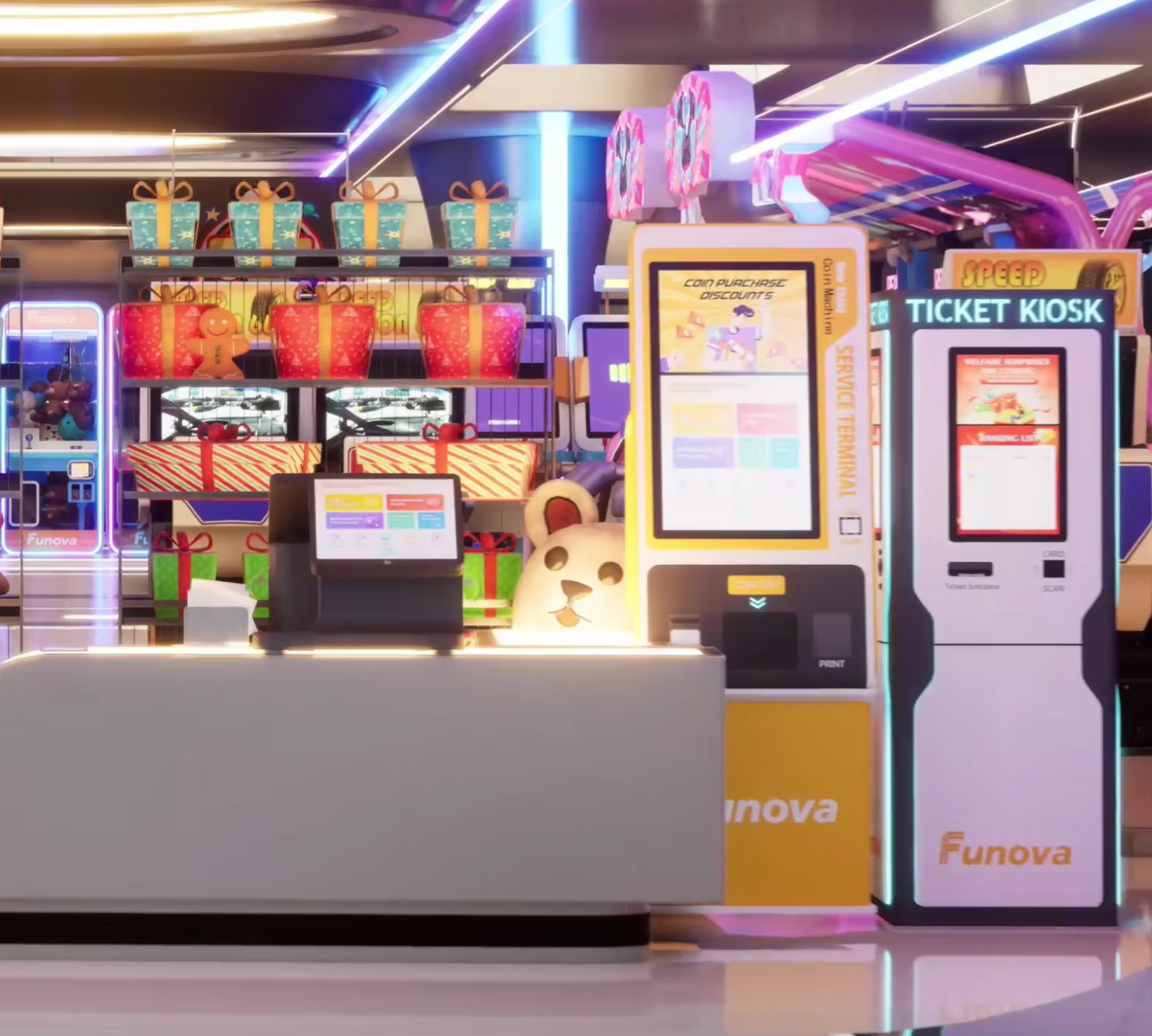
Modern arcades leveraging a realtime arcade cashless system reduce equipment downtime resolution time by 30% compared to manual reporting (Arcade Ops Report 2024). By streaming gameplay metrics, revenue patterns, and machine performance data instantly, managers identify underperforming units and reallocate resources within minutes—transforming operational responsiveness from hours to seconds.
Cashless systems process 450+ transactions per minute while flagging anomalies like payment errors or game malfunctions. This enables staff to address issues before they escalate—a critical capability when 68% of players abandon malfunctioning machines within 5 minutes (LinkedIn Gaming Study 2025). Operators using these insights report 25% faster decision-making cycles during high-traffic periods.
A Midwest entertainment center reduced machine downtime by 40% after implementing cashless system alerts. Technicians received SMS notifications specifying fault codes and required parts, cutting diagnostic time from 18 minutes to 90 seconds. As a result, daily revenue per machine increased by $220 during peak hours.
52% of arcades now use predictive maintenance models powered by real-time data analytics, up from 14% in 2020 (FEC Trends Report 2025). Managers increasingly preempt issues like coil wearouts or credit depletion using automated trend forecasting rather than waiting for customer complaints.
Successful operators implement three key practices:
Venues combining these tactics achieve 19% higher customer retention rates than peers relying on legacy systems, according to industry agility studies.
Today's real-time arcade cashless systems give operators control over prices, special offers, and how machines are performing at all their different locations. According to the latest FEC Benchmark Study from 2024, places that switched to these integrated platforms saw about 40 percent fewer mistakes in day-to-day operations than those still using old school systems. The magic happens through RFID technology which automatically applies changes to policies throughout whole networks of machines. No more having to check each machine individually or deal with discrepancies between sites. Players get the same experience no matter which location they visit, which makes sense for both customers and business owners looking to streamline their operations.
Operators can modify prize ratios, bonus thresholds, and machine configurations through mobile interfaces during peak hours—a capability that reduced average downtime by 30% in early adopter venues. Cloud-based dashboards display live consumption patterns, allowing managers to shift credit bonuses to underperforming games or launch time-sensitive upselling campaigns mid-shift.
While central control optimizes broad operational parameters, leading systems preserve location-level flexibility for staffing decisions and maintenance prioritization. This hybrid model supports corporate-wide security protocols while empowering venue managers to allocate cleaning crews or technician visits based on real-time equipment alerts.
The way arcade owners run their businesses is changing big time these days. Instead of relying on gut feelings, about 7 out of 10 managers are now looking at live data to make decisions according to the latest Amusement Tech report from 2024. Cashless payment systems aren't just making transactions easier they're actually tracking how players interact with individual games. These systems show when customers tend to spend the most money and which machines just aren't cutting it. Arcades that have adopted this kind of analysis typically see around 18 percent more people coming back for another round, mainly because they can offer tailored incentives based on actual behavior patterns instead of random guesses.
Critical indicators like per-game revenue, average session duration, and prize redemption success rates update every 30 seconds. Operators reduce stockouts by 40% through automated inventory alerts tied to real-time consumption data—for example, triggering reorders when a prize’s redemption rate exceeds 65%.
A 32-location arcade chain implemented machine learning models analyzing over 450,000 monthly transactions. The system identified that players spent 22% more on weekends when rhythm games featured dynamic lighting effects. By aligning promotions and maintenance schedules to these insights, the chain achieved a 27% revenue increase in Q4 2023.
35% of arcades with 15–50 machines now use AI to predict equipment failures up to 48 hours in advance, cutting repair costs by $120 per incident (Arcade Operations Review 2024). These tools analyze motor heat signatures and credit input frequency to forecast maintenance needs.
Leading operators conduct biweekly "data huddles" where teams review metrics like player return rates and prize cost-to-revenue ratios. Venues using this approach report 31% faster adaptation to seasonal demand shifts, with frontline staff using dashboards to adjust ticket redemption values during peak hours.
Modern arcades using real-time arcade cashless systems eliminate manual cash counting through automated transaction matching. Finance teams report 78% faster reconciliation cycles compared to traditional operations (Cash Management Institute 2023). This reduces accounting errors and frees staff to focus on enhancing customer experience instead of administrative tasks.
Cashless systems bring all payments together at once for redemption stations, prize machines, and game terminals throughout the facility. Arcade owners no longer need to waste time counting money from different registers every day. We're talking about saving around 12 hours per week according to recent industry research from last year's Amusement Tech Survey. And when management can see exactly where people are spending their money right now, it makes sense to shift staff around based on actual foot traffic rather than guesswork. Some places report being able to cut labor costs by nearly 15% just by having better insight into customer behavior patterns.
While cashless systems require initial hardware investments, operators typically recover costs within 14 months through labor savings and 31% revenue growth from upsell opportunities (Operational Excellence Report 2024). Automated venues achieve 19% higher net margins than cash-reliant competitors despite higher tech expenditures.
Arcades today are getting smart about money matters thanks to these new cashless systems that track what's happening in real time. The price tags on games aren't stuck at the same old rates anymore. Instead, they change depending on how busy the place is, which machines people actually use, and how long folks stick around playing. When there's a rush during prime hours or certain attractions sit empty for too long, the system kicks in and adjusts prices accordingly. Retail experts say this kind of dynamic pricing can really pad the bottom line, maybe even increasing profits somewhere between 10% and 20%. For arcade owners, this means better control over their revenue streams while keeping customers happy with fair pricing when it makes sense.
A regional arcade chain implemented tiered pricing through their cashless platform, reducing afternoon rates by 20% while maintaining premium evening pricing. This strategy resulted in:
| Metric | Before Implementation | After 90 Days |
|---|---|---|
| Off-peak visits | 112 daily | 291 daily |
| Avg. spend | $8.50 | $14.20 |
| Machine ROI | 18 months | 11 months |
Real-time reporting enabled staff to validate results quickly, prompting a nationwide rollout.
34% of arcades now incorporate game mechanics into pricing through:
This fusion of entertainment and commerce increases average player retention by 40 minutes per session compared to static pricing models.
Leading operators employ A/B testing frameworks within their cashless systems to evaluate pricing changes across control groups. According to the 2024 Entertainment Tech Report, venues that iterate prices weekly achieve 27% faster revenue growth than those adjusting quarterly. Key implementation steps include:
What is a real-time arcade cashless system? A real-time arcade cashless system is a technology that allows arcade operators to monitor and process transactions immediately without using physical cash. It optimizes operations through data analytics and remote management.
How do cashless systems enhance decision-making in arcades? Cashless systems process a large number of transactions quickly, flagging errors and enabling quick issue resolution. This enhances decision-making speed by providing real-time insights into machine performance and player behavior.
What are the benefits of predictive maintenance models in arcades? Predictive maintenance models, powered by real-time data, help detect potential equipment failures before they occur, reducing downtime and maintenance costs.
How do dynamic pricing models work in arcades? Dynamic pricing models adjust the price of arcade games and experiences based on real-time demand signals, allowing for optimized revenue streams based on peak and off-peak periods.
What are some strategies for integrating real-time data into arcade management? Strategies include conducting morning briefings using overnight data summaries, training staff on data interpretation, and using dashboards for displaying live player metrics to enhance operational transparency.

 EN
EN